How income works in LINE UP! Metro Tycoon
The reliable way to grow income is to build a route that can carry passengers, then spend the next earnings on the capacity and service quality that let that route keep working. Money comes from station activity, passenger transport, completed connections, tourists, and city investments such as Landmarks. The strongest early decision is therefore not “buy every station,” but “add the next connection only when the trains, station levels, and maintenance can support it.”
There is no fixed income number that applies to every city or upgrade level in the available game information. Costs and returns can change with the city, route, upgrades, and current game balance. Use the current purchase, station, and train panels as the final authority for values while applying the priorities below.
Income sources and what they do
The following reference groups the income systems by how you use them. The source column describes the player-facing role, not a guaranteed payout amount.
| Income source | How it contributes | Best use |
|---|---|---|
| Passenger flow | Connected stations and trains carry passengers and generate the main operating income | Keep train capacity and station development close to route size |
| Completed connections | Finishing a new track or station connection expands the network and adds another earning opportunity | Buy the next connection when the current line can serve it |
| Tourists | Tourist-focused locations add visitors over time as an extra income stream | Add them after the active passenger route is stable |
| Landmarks | City attractions are purchasable development investments tied to longer-term expansion | Treat them as discretionary spending after core capacity needs |
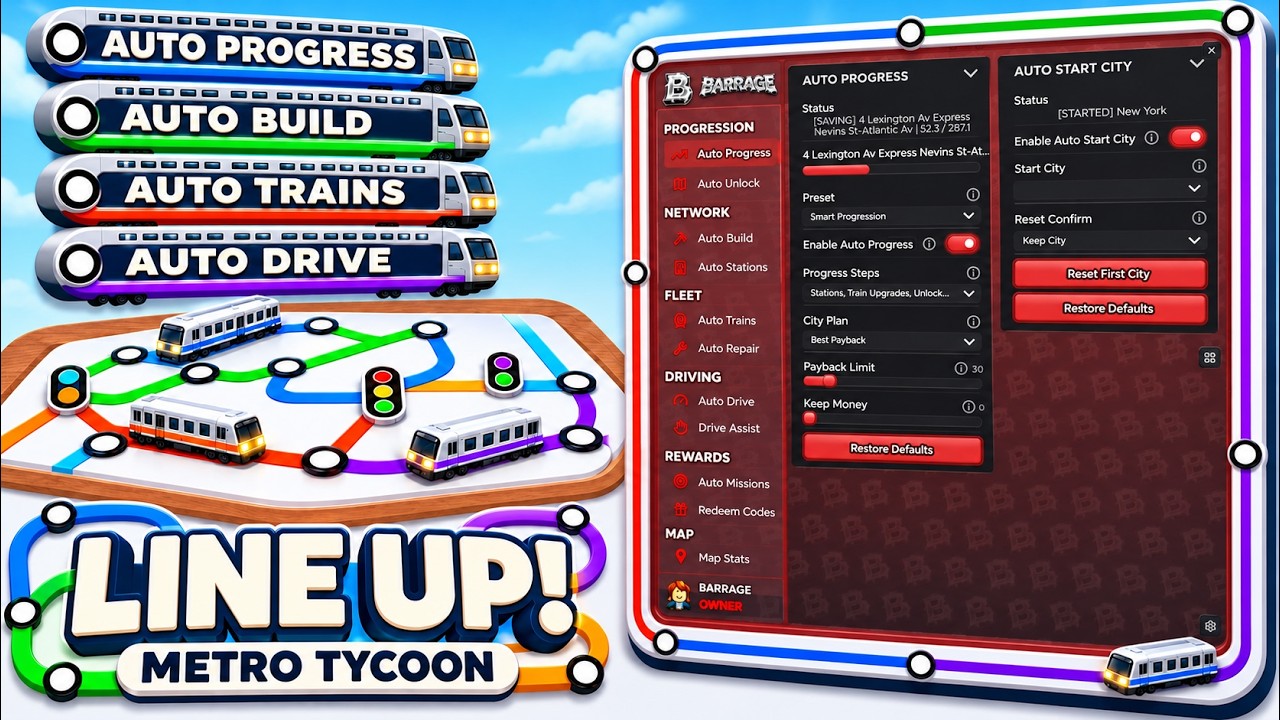
| Automation | Automation can build, buy or upgrade trains, repair, upgrade stations, buy Landmarks, and move between cities | Use it to maintain an established income cycle rather than replace planning |
Passenger flow is the core source to protect first. A station only becomes useful to income when it is connected to a working line and the line has enough train capacity to serve the people using it. A larger map with empty train slots can look like progress while delivering weaker service and lower Happiness. Conversely, filling the available train slots and keeping vehicles in good condition helps the network make use of the stations already purchased.
Tourists are different from passenger income because they are an additional, time-based contribution from tourist locations or attractions. The available evidence confirms the role of tourists but does not establish one universal visitor rate for every location. Read the current location panel before treating a tourist purchase as a specific payback calculation.
Use tourist locations to add income
This moment supports the section's explanation that stations and tourist places generate Money, with tourists serving as an additional income source.

Landmarks are another investment category. They support city development and can contribute to the broader income plan, but the available records do not establish a complete list of Landmark names, prices, yields, or a best purchase order. Compare the live cost with the immediate needs of your line instead of assuming the most expensive Landmark is automatically the most profitable choice.
Reinvest Money without stalling the network
Income in this game is strongest when each purchase removes a current bottleneck. Use this order as a practical decision rule:
- Keep the active line operational. If a train or line needs Repairs, restore it before making an ambitious expansion. Deteriorating service can reduce quality and leave recently purchased stations underused.
- Fill empty train slots. Buy or assign trains to the line that is already serving stations. The
Fill All Empty Slotaction is useful because it addresses unused capacity directly rather than adding map area first. - Raise the limiting station or train level. Upgrade the station or train that is restricting capacity, access, or the next unlock. Station levels can open further locations, branches, and vehicles, so an upgrade can be more valuable than another disconnected purchase.
- Extend the line by one useful connection. Choose a nearby station or branch that expands reachable coverage and can be served by the current network. Check the new cost before committing, because later connections require more Money.
- Add a tourist location or Landmark. Once passenger service is stable, spend surplus Money on an attraction that adds another income path or supports city progress.
- Repeat the check. After every major purchase, inspect Happiness, train condition, empty slots, and the next unlock before buying again.
This order is not a promise that every city has the same optimal build. It is a way to prevent a common failure: using all available Money on stations while leaving the trains, station levels, or maintenance behind. If the next station causes Happiness to fall, pause expansion and repair the service system before adding another branch.
Passenger income, Happiness, and capacity
Happiness is a useful warning signal for income decisions. It reflects whether the network’s capacity and quality match its current size. Buying more stations can make Happiness fall when trains do not have enough capacity, when empty slots remain, when stations need upgrades, or when vehicles and lines require maintenance. Happiness is therefore not a separate cash source; it is a practical indication that passenger income is being supported well or poorly.
Use these relationships when reading the network:
- More stations without more service: coverage grows, but passengers may not be carried efficiently. Add trains or improve the relevant station before extending again.
- Full train slots and healthy vehicles: the line is better positioned to carry passengers from the stations it already owns. This is usually a safer income improvement than buying an isolated station.
- Low or falling Happiness: treat it as a capacity or quality warning. Check train slots, station levels, and condition, then repair or upgrade before expanding.
- A completed branch: it can increase coverage and later support a larger route, but it also creates another service obligation. Make sure the active line can reach the new area.
- A circle route: interconnected lines can become a longer-term expansion goal when the budget supports them. Do not force a circle before the basic route can pay for its own capacity and maintenance.
The key comparison is marginal usefulness: ask which purchase lets the current passenger network earn more reliably. A train that fills an empty slot, a station upgrade that unlocks a needed location, and a repair that restores service can each outperform a new station that the line cannot yet serve properly.
Tourists and Landmarks as secondary income
Tourist income works best as a supplement to a functioning metro rather than as a substitute for passenger service. Build or select a tourist-focused location when the route has enough stability that the purchase will not consume the Money needed for repairs, trains, or a required station upgrade. Visitors accumulate over time, so the benefit is more useful when you intend to keep operating in that city rather than immediately abandon it for another unlock.
Landmarks fit a similar decision. They are city-development purchases that can support the broader progression of a city, but their individual returns are not established as a fixed public table. Before buying one, compare three things in the current interface:
- the Landmark’s present cost;
- the train, station, or line upgrade you would delay;
- whether you plan to keep this city active long enough to benefit from the investment.
If the line is short on capacity, choose the service upgrade. If the line is stable and the next core upgrade is expensive or locked behind progress, a tourist location or Landmark can make better use of surplus Money. This keeps secondary income from becoming a reason to neglect the route that funds it.
Income limits, changing values, and recovery choices
The game does not provide one universal cash-per-minute figure that can be applied to every city. A live result depends on the stations connected, the trains assigned, station and train upgrades, maintenance, tourist locations, Landmarks, and the current balance. Use the in-game panels for exact prices, capacity, condition, and any displayed earnings rather than copying a number from a different city or older session.
When income appears slow, diagnose the network before spending more:
- You bought stations but earnings did not improve: fill train slots, check the line reaches the stations, and upgrade the limiting station.
- Happiness dropped after expansion: pause new purchases, add capacity, perform Repairs, and only then test another connection.
- A tourist purchase feels ineffective: confirm that the location is active and allow its displayed accumulation to work; do not assume every attraction has the same rate.
- A Landmark blocks the next train or station: keep the city investment, but return to passenger capacity and maintenance until the route can fund the next upgrade.
- Automation spends poorly: limit it to an established city or review its train, repair, station, Landmark, and movement choices before leaving it unattended.
Automation can handle many repetitive actions, including building sections, purchasing and upgrading trains, repairing, upgrading stations, buying Landmarks, completing missions, exchanging money, and moving between cities. It is most useful after you understand the income priorities and have a route that is already sustainable. Automation does not remove the need to decide which city, line, or investment should receive the next budget.
Automate the income cycle
This moment supports the Automation guidance by showing automated train purchases, station upgrades, Landmark purchases, repairs, and progression toward the next unlock.
The long-term income pattern is straightforward: connect stations, carry passengers, maintain capacity and Happiness, add secondary income when affordable, and reinvest the result into the next useful unlock. Apply that pattern city by city, and move to another region or city only when the current network can support the transition.
First-time LINE UP! Metro Tycoon income questions
Can automation manage the income cycle while I am away?
Yes. Automation can handle supported maintenance and progression actions such as building, train purchases and upgrades, repairs, station upgrades, Landmark purchases, missions, and movement between cities. Set it up after the city has a sustainable route, then review its spending choices rather than assuming it will select the best investment for every network.
Do tourists replace passenger income?
No. Tourists are an additional income source from tourist-focused locations or attractions. Passenger transport remains the core operating activity, so stabilize the line’s trains, stations, and maintenance before treating tourist income as the main expansion budget.